Soft Washing vs Pressure Washing: Which Does Your Home Need?
"Pressure washing" gets used as a catch-all word, but it's really two very different methods — and using the wrong one on the wrong surface is how Florida homeowners end up with stripped paint, torn pool screens or a permanently etched driveway. Here's the plain-English difference, a surface-by-surface guide, and how I decide which tool comes off the trailer for every job in Bradenton.
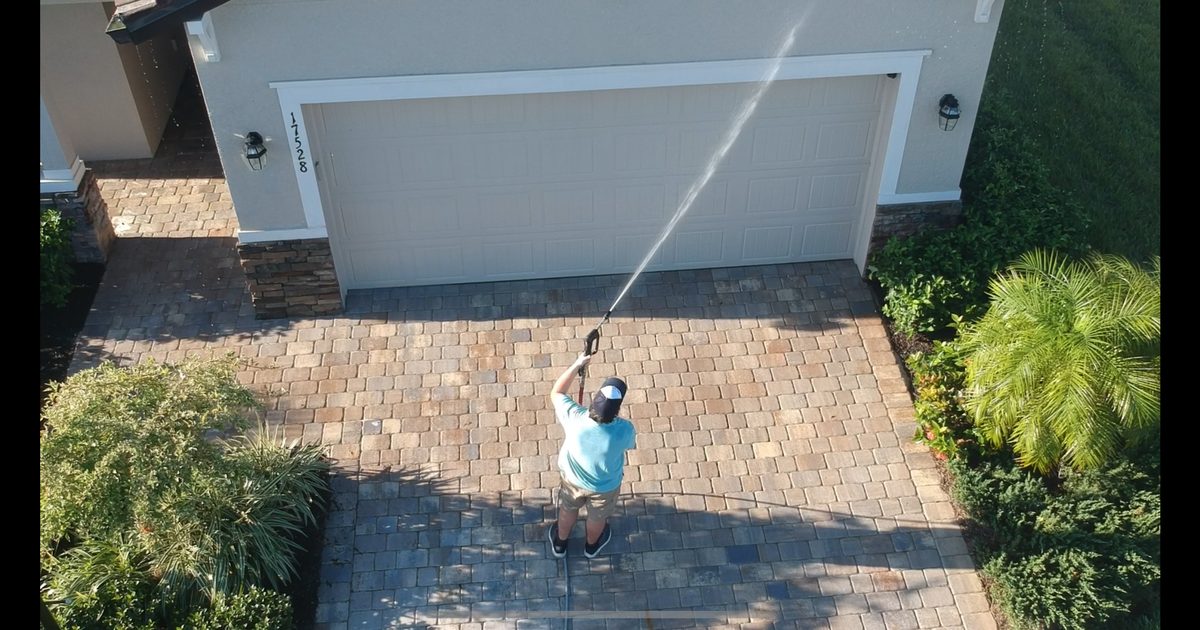
What is pressure washing?
Pressure washing is exactly what it sounds like: high-pressure water — often 3,000+ PSI through a surface-cleaner attachment — used to blast dirt, algae and stains off hard, durable surfaces. That force is what takes a gray, mildew-streaked driveway back to a brilliant white. The right candidates for high pressure are surfaces that can take a beating without absorbing water or losing a finish:
- Concrete driveways and garage aprons
- Sidewalks, front walks and culverts
- Paver patios and pool decks
- Brick and stamped concrete
On these surfaces, a pro uses a flat surface cleaner to keep the cleaning even — no zebra striping from a hand wand — and follows up with a pretreatment so the result lasts. This is the heart of our driveway & concrete cleaning package, and it's also the workhorse method behind most general pressure washing in Bradenton.
What is soft washing?
Soft washing flips the formula. Instead of relying on brute force, it uses low pressure plus a professional cleaning solution that actually kills the mold, mildew and algae at the root rather than just knocking it loose. The solution does the work; the gentle rinse simply carries it away. That makes soft washing the correct — and only safe — method for delicate surfaces:
- House siding (vinyl, stucco, Hardie, painted wood)
- Roofs and shingles
- Pool cage screens and lanai enclosures
- Painted trim, soffits and fascia
- Screens, shutters and other fragile fixtures
Because Florida's humidity grows algae fast, soft washing is the backbone of our house washing service and our pool cage & lanai screen cleaning. Done right, plants are pre-wet and rinsed afterward, and the cleaning solutions are diluted to safe levels so your landscaping is protected.
Quick reference: which method does each surface need?
When homeowners ask me "do you pressure wash my whole house?" the honest answer is no — most of a home should never see high pressure. Here's how the common surfaces around a typical Bradenton property break down:
| Surface | Recommended method |
|---|---|
| Driveway, sidewalk & concrete | Pressure washing — high pressure + surface cleaner |
| House siding | Soft washing — low pressure + cleaning solution |
| Pool cage & lanai screens | Soft washing — low pressure, screen-safe |
| Gutters (exterior face) | Soft washing — gentle to protect paint & seams |
| Roof & shingles | Soft washing — never high pressure |
Why the wrong method causes real damage
This isn't a sales scare tactic — it's the most common reason a homeowner calls me to fix a job that was done with the wrong tool. High pressure aimed where it doesn't belong does lasting, expensive damage:
- Etched concrete. Holding a high-pressure wand too close, or lingering in one spot, carves visible lines and a fuzzy, pitted texture into concrete that never comes out — even careful concrete cleaning has to respect distance and technique.
- Torn pool screens. Pool cage screens are mesh. A pressure-washing tip will blow right through them or stretch them loose from the frame, turning a cleaning into a re-screening bill.
- Stripped paint and forced water. On siding and painted trim, high pressure peels finishes and drives water up behind siding and into wall cavities — exactly where you don't want moisture in humid Florida.
Every one of those is avoidable. The fix is simply matching the method to the surface — which is the whole job.
How Polar Bear chooses
I'm Logan — I personally do the work, so I'm the one deciding which method each surface gets before I even pull the trigger. The rule is simple: high pressure for hard concrete, soft wash for everything delicate. Concrete and driveways get the high-pressure surface cleaner. Siding, roofs, screens, lanais and painted surfaces get a low-pressure soft wash with the right cleaning solution. I bring a professional, industry-grade trailer rig — not a box-store wand — so I can switch between the two on the same visit and protect your landscaping along the way.
One thing homeowners notice and love: our soft-wash house washes leave the house smelling fresh, not like bleach. A clean home shouldn't announce itself with a harsh chemical cloud — ask about our signature scent upgrade.
The bottom line
"Pressure washing" and "soft washing" aren't competing services — they're two tools for two kinds of surfaces, and a good pro uses both on a single property. If you're unsure which your home needs, you don't have to figure it out alone. Send me a photo or a quick description of what's dirty and I'll tell you straight which method it needs and give you an honest, free estimate — most the same day, and most jobs done within 48 hours of booking.